|
Notes from the Director: Of Avatars and Inventors
Innovative effects from Hollywood's studios today are part of the continuum of filmmaking technology from the Lumiere brothers, through Thomas Edison and George Lucas, to James Cameron's "Avatar." |
|
|
 |
The Ruby Slippers: Inventing an American Icon
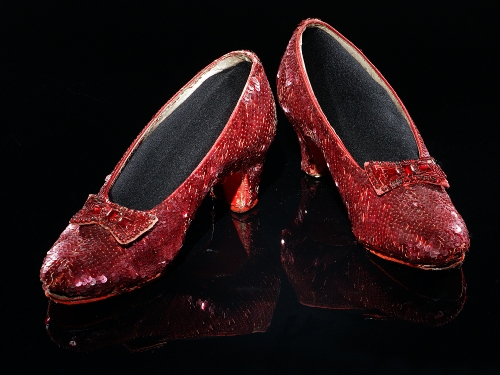
Hollywood has become legendary for its ability "to reflect . . . the collective daydreams of America," as illustrated by the innovation that went into the creation of one iconic movie prop--Dorothy's ruby slippers in "The Wizard of Oz." |
|
|
|
|
|
 |
Hunting and Gathering for the Museum's Collections
When it comes to food-related collections at the National Museum of American History, it's a veritable feast. What began with a phone call about a Bundt pan ended in a treasure trove for people with wide-ranging appetites for history. |
|
|
|
|
|
 |
The Talking Leaves
Sequoyah was a Cherokee trader, a silversmith, a blacksmith, an artist, and a Cherokee speaker who neither read nor wrote English. But he saw the power of those who could communicate using the “talking leaves.” It inspired him to invent one of the few known (and used) writing systems created entirely by an individual. |
|
|
 |
Notes from the Director: Hispanic Heritage Month
America's future competiviteness and innovation will depend on its ability to draw Hispanics, who according to the U.S. Census Bureau, are the fastest-growing and already the largest minority population, into the ranks of scientists and engineers. |
|
|
 |
Bittersweet Harvest
Chronicling an important but little-known chapter of American history, Bittersweet Harvest, a new traveling exhibition, tells the moving story of America’s largest guest-worker program. |
|
|
 |
Notes from the Director: National Inventors' Month
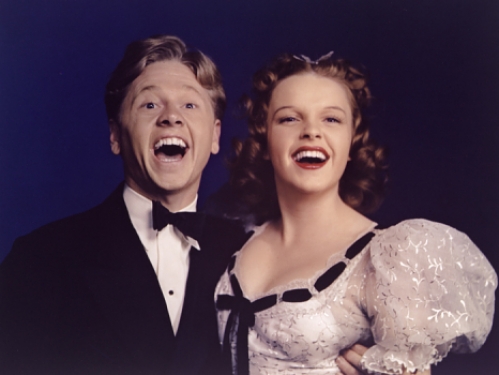
Often overlooked are the little-known contributions of the rich and famous. Take the case of musicians and movie stars, for example. Even though they are creative in their own fields, it never occurs to us that they could also be inventors. |
|
|
 |
The Invisible Inventor?
Why have inventors--once revered as heroes--become “invisible” while corporate brands have become increasingly associated with high-tech innovation? |
|
|
|
|
|
 |
Revealing the Secrets of Stradivari
Antonio Stradivari is universally acknowledged as the most famous and influential of violinmakers. The Stradivari workmanship and the qualities of tone associated with his instruments are generally thought to be unsurpassed. What makes the Stradivari instrument unique? |
|
|
 |
Notes from the Director: The Spirit of Invention
I'm very excited about the publication of Julie Fenster's intriguing new book, "The Spirit of Invention: The Story of the Thinkers, Creators, and Dreamers Who Formed Our Nation," published in collaboration with the Lemelson Center. |
|
|
 |
Genius, Self-Taught
Elmer Gates (1859-1923) invented many things, including the familiar children's toy box with geometric pegs and holes. But his life work was "the experimental study of mind and the most successful ways of using it." Elmer Gates invented to study his own creative process. |
|
|
 |
Notes from the Director: Of Nobel Prizes and Erector Sets
In accepting his appointment as secretary of energy, Steven Chu became the first Nobel science laureate to serve in a cabinet position. His selection was also a first for a Chinese American scientist, the type of societal breakthrough marked each May by Asian Pacific American Heritage Month. |
|
|
 |
The Way the Ball Bounces
Asian people have been inventors and innovators for many centuries. But what's up with "race" and invention or innovation? And what can Asian Pacific Americans tell us about this issue? |
|
|
 |
Notes from the Director: Eco-Cities
Today, the buzz is all about "sustainability," with an emphasis on alternative energies, renewable resources, and carbon-neutral technologies. Sustainability, however, has taken on a whole new dimension with the rise of the eco-city concept. |
|
|
 |
"The Blue Marble"
The famous photograph of the whole Earth, dubbed "The Blue Marble," is one of the most iconic images of our time. |
|
|
|
|
|
|
|
|
|
|
|
|
|
|
 |
Voting Machines, American Style
Because the Constitution gives states the job of running elections, voting in the United States has developed into a hodgepodge of manual, mechanical, and electronic balloting. Learn more about voting machines, American style. |
|
|
|
|
|
|
|
|
|
|
|
|
|
|
|
|
|
|
|
|
|
|
|
|
|
|
|
|
|
|
|
|
 |
Cultures of Innovation
Lemelson Center Director Art Molella looks at the social climates receptive to and encouraging of invention and innovation. |
|
|
|
|
|
 |
Inventing for Humanity
Uncertain times inspire a new altruistic mood among high-tech entrepreneurs and a focus on invention for the benefit of humanity. |
|
|
 |
Yo Yo Ups and Downs
A folk toy from the Phillipines became a craze, thanks to Filipino émigré Pedro Flores and a Chicago businessman named Donald Duncan. |
|
|
|
|
|
|
|
|
|
|
|
|
|
|
|
|
|
 |
Architecture and Innovation
Internationally renowned architects Douglas Cardinal and Santiago Calatrava offered their perspectives on the role of innovation, technology, and the creative process in architecture at the end of the 20th century. |
|
|
 |
Electrified, Amplified, and Deified
Just the words “electric guitar” can conjure images in our minds, from Jimi Hendrix playing “The Star Spangled Banner” to the local garage band. In 1996, the Center spotlighted the inventors and players who plugged in and forever changed the sound of American music. |
|
|
 |
The Colors of Invention
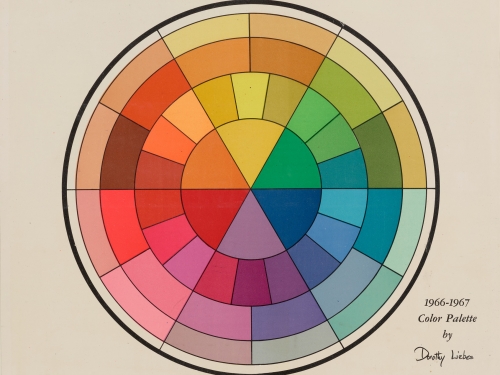
Color shapes our perception of the world. In 1997, the Center explored the interaction of technology, perception, and culture by considering why and how we create and use colors in “The Colors of Invention.” |
|
|
 |
The Inventor and the Innovative Society
What do Renaissance Italy, 19th century New York City, and California’s Silicon Valley have in common? The Center’s first symposium explored how these societies nurtured and sustained the inventive impulse. |
|
|
 |
Documenting Invention
Learn about the Center’s work in saving the records of living inventors through the Modern Inventors Documentation program. |
|
|
 |
Unleashing Creativity
A keynote presentation by Paul B. MacCready at the Lemelson Center's symposium, "The Inventor and the Innovative Society." |
|
|
 |
It's a Pleasure to Serve You: Lamson Cash Carrier System
Some mechanical inventions are so well thought out and trouble-free that they almost never need to be replaced. The Lamson cash carrier, a device that sent cash, sales slips, and receipts sailing over customers’ heads in 19th century retail shops, was such an invention. |
|
|
 |
"Tantalus" Synchrotron Radiation Source
Through videohistory interviews with physicist Ednor Rowe and others, the Lemelson Center documented the human side of the "Tanatalus" particle accelerator. |
|
|
 |
SmartLevel
Oral history interviews reveal Silicon Valley inventor's team approach to updating the traditional carpenter's level. |
|
|
 |
Minerva, The Robotic Tour Guide
For the first time in the Smithsonian’s history, a high-tech robot gave tours to the public. Meet Minerva, the robot tour guide, who can perceive her environment and learn about it. |
|